17 November 2026
What to Consider Before Booking a Dune Buggy Ride in Dubai
Presented by @eveningdesertsafaridubaiplus
Dubai's desert landscape offers a thrilling backdrop for an adventure ride on an all-terrain vehicle. A dune buggy lets you cover sandy tracks at speed, climbing and descending dunes that shift with the wind. Before you commit to a booking, a few practical checks can save you from disappointment or safety issues. The points below cover the essentials to look into, from the vehicle condition to the terrain and the operator's basic arrangements.
Many visitors assume that any buggy is suitable for any desert area. In reality, the design of the vehicle, the type of sand track, and the weather conditions all affect how safe and enjoyable the experience will be. Taking a few minutes to confirm these details before you book can make the difference between a memorable ride and a frustrating one.
Vehicle Condition and Maintenance
The mechanical state of the dune buggy matters more than its colour or model. A well-maintained machine will respond predictably on loose sand, while a neglected one can leave you stranded or cause a dangerous loss of control. Ask the provider about their maintenance schedule and how often they inspect the buggies. Look for signs of wear such as cracked seats, worn tyres, or leaking fluids when you see the vehicle up close. A reputable operator will not mind you checking these details.
Tyres are especially important on sand. Standard tyres designed for tarmac will dig in and cause the buggy to bog down. Purpose-built sand tyres with a wide footprint and deep tread help the vehicle float on the surface. Confirm that the buggy you will drive has tyres suited for dune terrain. Similarly, check that the safety restraints - seat belts and harnesses - are in good working order and are not frayed or stiff.
Safety Briefing and Protective Gear
A proper safety briefing is non-negotiable. The guide should explain the controls of the buggy, the hand signals used during the ride, and the correct body position for climbing and descending dunes. They should also cover what to do if the vehicle tips or gets stuck. Without this briefing, even an experienced driver can misjudge a steep slope or a hidden dip.
Protective gear is equally important. A helmet is standard, but check that it fits snugly and has a visor or goggles to keep sand out of your eyes. Gloves protect your hands from blisters and from the heat of the steering wheel. Long sleeves and trousers reduce the risk of sunburn and abrasion if you slide on sand. If the operator does not provide these items or allows you to ride without them, consider that a red flag.
Age and Licence Requirements
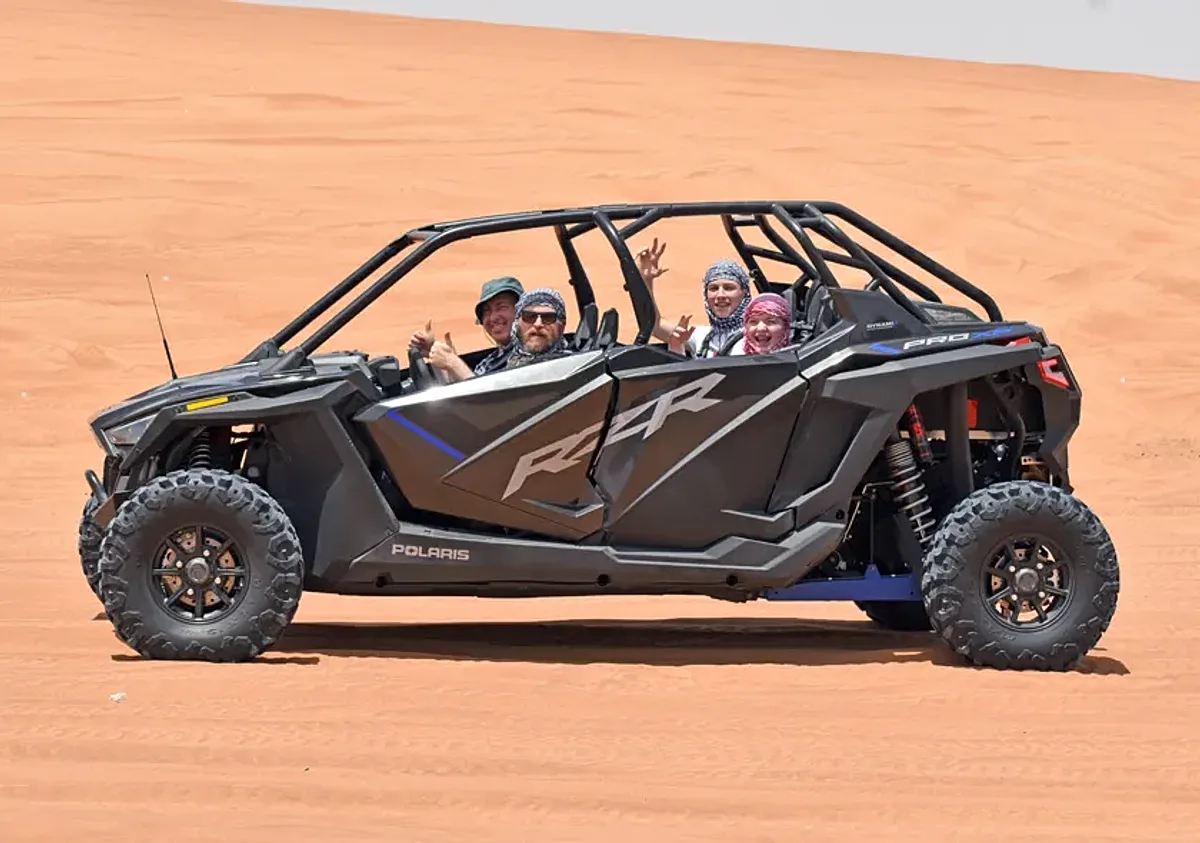
Driving a dune buggy is not the same as driving a car. However, most operators in Dubai require a valid driving licence for anyone who will take the wheel. Check the minimum age and licence type required before you book. Some providers accept a standard car licence, while others may require a specific category. If you are visiting from abroad, an international driving permit may be needed. Confirm this well ahead of your trip to avoid being turned away on the day.
Age restrictions also apply to passengers. Children below a certain height or age may not be allowed on the buggy at all, or may be limited to a slower, separate vehicle. Ask the operator about their policy and do not rely on assumptions.
Desert Terrain and Track Conditions
The desert around Dubai varies from hard-packed gravel plains to soft, shifting dunes. The type of terrain determines how challenging the ride will be and what skills you need. A beginner-friendly track stays on relatively flat, compacted sand with gentle slopes. An advanced route includes steep dune faces, sharp turns, and loose sand that demands constant steering corrections.
Find out from the operator what level of difficulty they offer and match it to your experience. If you have never driven on sand before, a short introductory ride on a moderate track is wiser than a long, aggressive session. Also ask about the track length and duration. Some operators advertise a "two-hour safari" that includes only forty minutes of actual driving, with the rest taken up by stops and transfers. Clarify what you are paying for.
Weather conditions also change the terrain. In summer, the sand is loose and hot, making it harder to gain traction and easier to overheat the engine. In winter, the sand is cooler and more compact, which can make the ride smoother but also more predictable. Rain is rare but can turn the desert surface into a slick, hard crust that behaves differently from dry sand. Check the forecast for your booking date and be prepared for the conditions.
Operator Reputation and Insurance
Not every dune buggy operator follows the same safety standards. Look for a company that is licensed by the relevant Dubai tourism or transport authority. A licensed operator is more likely to maintain their vehicles properly, employ trained guides, and carry adequate insurance. You can often verify their licence number on the government's website or through a quick phone call.
Insurance is a detail many riders overlook. Ask whether the booking fee includes personal accident cover and third-party liability. If it does not, consider taking out your own travel insurance that covers adventure sports. A minor collision or a rollover can cause injury or damage that leads to significant out-of-pocket costs. Knowing you are covered before you set off gives peace of mind.
Group Size and Guide Ratio
A crowded convoy of buggies can be less enjoyable and more dangerous than a small group. Dust from the vehicles ahead reduces visibility, and the risk of collision increases when too many buggies bunch together. Ask the operator how many vehicles they take out in one group and what the guide-to-rider ratio is. A good rule of thumb is one guide for every four to six buggies. If the group is larger, the guide may struggle to keep everyone safe and provide individual attention.
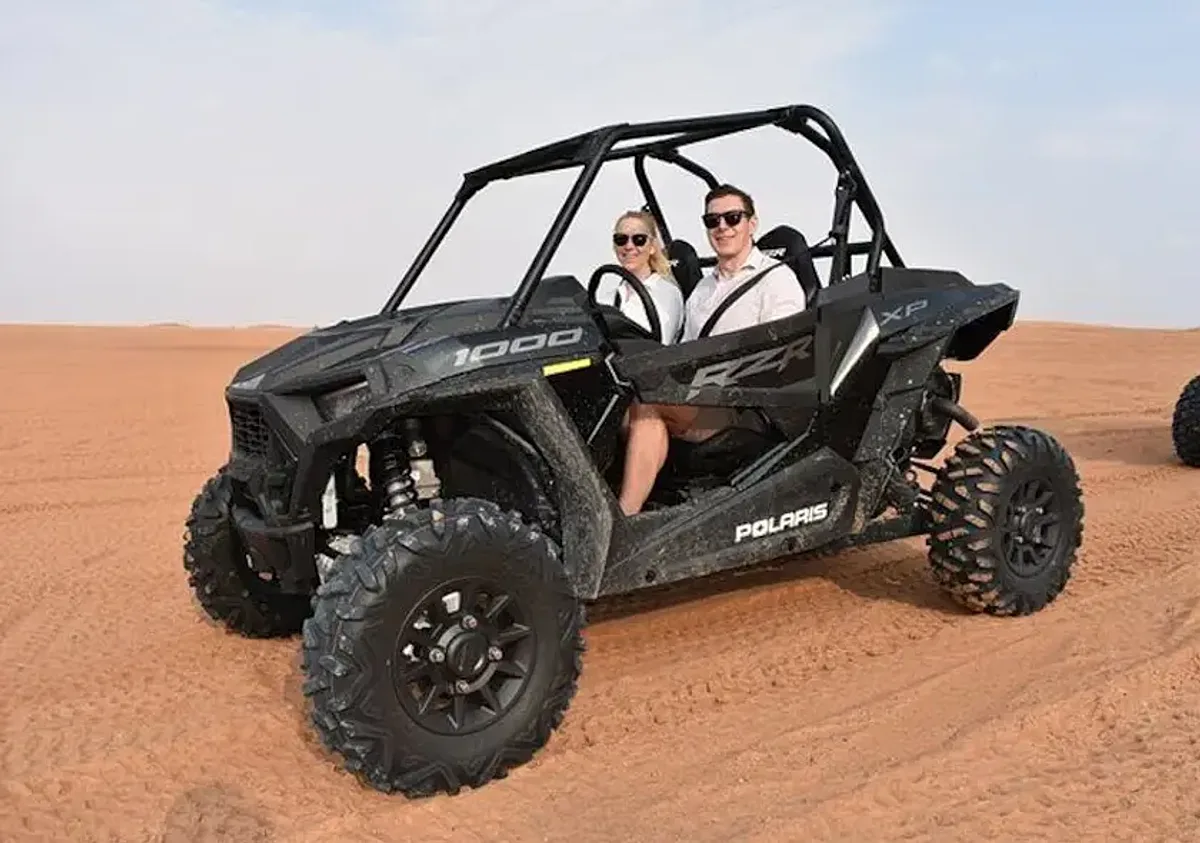
Some operators offer private or small-group sessions for an extra fee. If you value a quieter, more controlled experience, that option can be worth the cost. For those on a tighter budget, a standard group ride is still fine as long as the ratio is reasonable.
What to Wear and What to Bring
The desert sun is intense even in the cooler months. Wear light, breathable clothing that covers your arms and legs. A cotton or moisture-wicking long-sleeved shirt and lightweight trousers work well. Closed-toe shoes are essential; sandals or flip-flops will not protect your feet from the heat of the pedals or from sand burns if you need to get out and push. A scarf or a shemagh can be useful to wrap around your face when the wind picks up.
Bring water. A standard half-litre bottle is rarely enough for an hour of physical driving in the heat. A hydration pack that you can sip from during stops is ideal. Sunscreen with a high SPF should go on exposed skin, and you should reapply it during breaks. A small bag with a towel and a change of clothes is useful for the ride back, as sand will find its way into every pocket and fold.
Booking Terms and Cancellation Policy
Read the terms of your booking carefully before paying. Some operators require a non-refundable deposit, while others offer full refunds up to a certain number of hours before the ride. Check the cancellation policy, especially if you are travelling during the summer when desert storms or extreme heat can force a cancellation. Also confirm what happens if the operator cancels due to weather: whether you get a full refund or a rescheduled slot.
Payment methods vary. Some companies accept only cash on arrival, while others prefer credit card payments online. If you pay by card, check that the payment gateway is secure. Avoid transferring money to an individual's account unless you are certain of the operator's legitimacy.
For those looking for a reliable starting point, a company such as Safari Desert Dubai can offer a straightforward booking process and clear information about their vehicles and routes. Their team can answer specific questions about licence requirements, track difficulty, and what to bring, making it easier to prepare for your ride.
Final Practical Checks
On the day of your ride, arrive early. This gives you time to check the vehicle yourself, listen to the safety briefing without rushing, and adjust your gear. If something feels off - a strange noise from the buggy, a missing strap, or a guide who seems distracted - speak up. It is your safety and your money on the line. A good operator will appreciate your attention to detail and will address any concerns.
Keep your mobile phone in a sealed plastic bag or a waterproof pouch. Sand and dust can damage the charging port and speakers. A simple zip-lock bag works fine. If you plan to take photos, use a strap or a clip to secure the phone to your clothing so you do not drop it while driving.
After the ride, inspect the buggy for any damage you may have caused, even if it is minor. Report it to the guide immediately. Most operators have a damage waiver that covers normal wear and tear, but you may be liable for significant damage if you do not report it on site.
Riding a dune buggy in the Dubai desert is a fantastic way to experience the landscape up close. The key is to prepare properly. Check the vehicle, ask about the terrain, confirm the age and licence rules, and make sure you have the right gear. A little research beforehand turns a good ride into a great one.
If you are booking with Safari Desert Dubai, you can expect them to provide clear answers to these questions and to run their operations with attention to safety. Their focus on well-maintained vehicles and trained guides makes them a solid choice for anyone new to dune buggy riding in the region.